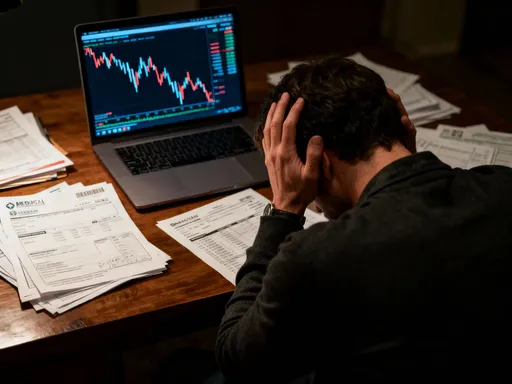
How I Found Gold in the Chaos — A Real Investor’s Playbook
Gold isn’t just shiny—it’s strategic. I learned this the hard way, watching markets swing while my portfolio barely blinked. Unlike flashy stocks, gold moves quietly but powerfully. Over years of testing, I discovered how to spot entry points, avoid emotional traps, and use gold not as a gamble, but as a calculated advantage. This isn’t hype—it’s what actually works when volatility hits. Let me show you how to see the opportunity where others see noise. It’s not about timing the market perfectly, but about understanding when gold shifts from background asset to frontline defense. And once you recognize that shift, you’re no longer reacting—you’re leading.
The Moment I Realized Gold Was Different
For years, I viewed gold as a relic—an outdated hedge for those preparing for societal collapse or retirees clinging to tradition. My focus was on growth: equities, tech startups, dividend payers, and real estate. Gold didn’t fit. It didn’t produce income, it didn’t scale, and it didn’t trend upward with innovation. But everything changed during the global market turbulence of 2020. As stock indices plummeted nearly 30% in a matter of weeks, panic rippled through investor communities. Portfolios built over decades seemed to evaporate overnight. Yet amid the chaos, gold didn’t falter. In fact, it began to climb—slowly at first, then with steady momentum. While other assets were being sold indiscriminately, gold was being bought with purpose.
This divergence wasn’t accidental. It revealed a fundamental truth: gold operates under a different set of market mechanics. While equities reflect corporate earnings, interest rate expectations, and consumer sentiment, gold responds to deeper forces—fear, uncertainty, currency stability, and long-term inflation expectations. When confidence in paper assets wavers, gold becomes a refuge. But more than that, it becomes a signal. Its movement often precedes broader economic shifts, making it not just a shelter, but a predictor. That realization marked a turning point in my investment philosophy. I began studying not just gold’s price history, but the conditions under which it outperforms.
What I found was consistent: gold tends to strengthen when real interest rates decline—even if nominal rates stay flat. It gains traction when inflation expectations rise faster than central banks can respond. And it shines brightest when geopolitical tensions or financial instability erode trust in institutions. These aren’t speculative theories; they’re observable patterns supported by decades of market data. For example, between 2001 and 2011, gold rose from under $300 per ounce to over $1,900, a period marked by the dot-com crash, 9/11, two major wars, and the 2008 financial crisis. Each event increased global uncertainty—and each time, gold absorbed the shock. Recognizing this pattern didn’t make me a market genius; it made me a better observer. And that’s the first step toward smarter investing.
Why Gold Is More Than a Safety Net
Most investors treat gold as a form of financial insurance—something to hold just in case everything goes wrong. They allocate a small percentage, often reluctantly, viewing it as a dead weight on returns during bull markets. But this mindset limits its potential. When used strategically, gold is not merely a passive safeguard—it’s an active component of a resilient portfolio. It doesn’t generate dividends, true, but its value lies in preservation, timing, and market signaling. Think of it like the keel of a sailboat: unseen, unglamorous, but essential for stability when winds turn violent. Without it, the vessel risks capsizing. With it, you can maintain course even in rough seas.
What sets gold apart is its inverse relationship with confidence in fiat currencies. When trust in central banks or government debt begins to waver—even slightly—gold quietly appreciates. This makes it a leading indicator, not a lagging one. Historically, significant gold rallies have preceded major inflationary episodes. For instance, in the early 1970s, gold began rising well before the U.S. experienced double-digit inflation. Similarly, in the years following the 2008 crisis, as central banks launched unprecedented quantitative easing programs, gold climbed steadily, peaking in 2011. Investors who recognized these early signals had time to adjust their portfolios before inflation eroded purchasing power elsewhere.
Moreover, gold’s role extends beyond inflation hedging. It also serves as a diversifier that behaves differently from other asset classes. During periods of equity market stress, correlations between stocks and bonds can break down, leaving traditional 60/40 portfolios vulnerable. Gold, however, often moves independently or even inversely to equities, providing balance when it’s needed most. Research from institutions like the World Gold Council shows that adding a modest allocation of gold—between 5% and 10%—to a diversified portfolio has historically improved risk-adjusted returns over time. This isn’t about chasing high returns; it’s about reducing downside risk without sacrificing long-term growth potential. When you begin to see gold this way—not as a backup plan, but as a strategic tool—you unlock its full utility.
Spotting the Signals Before Everyone Else
Timing is everything in investing, and gold is no exception. But unlike speculative assets driven by hype or momentum, gold responds to structural shifts that unfold over months, sometimes years. The key to successful gold investing isn’t reacting to price movements—it’s anticipating them by monitoring underlying indicators. Over time, I’ve identified three reliable signals that often precede a sustained rise in gold prices: rising concerns about real interest rates, weakening confidence in fiat currencies, and increased central bank buying activity. These signals don’t dominate headlines, but they are accessible to anyone willing to look beyond the noise.
The first signal—real interest rates—is perhaps the most powerful. Real interest rates are calculated by subtracting inflation expectations from nominal interest rates. When real rates fall, especially into negative territory, gold becomes more attractive because it carries no yield penalty. In contrast, bonds and savings accounts lose purchasing power. For example, if the 10-year Treasury yields 2% but inflation is expected at 3%, the real return is -1%. In such an environment, holding non-yielding assets like gold becomes rational. I track this through publicly available data from sources like the U.S. Treasury and inflation-linked bond markets. When I see real yields trending downward, I view it as a green light to consider increasing gold exposure.
The second signal is more psychological: a decline in confidence in fiat currencies. This doesn’t happen overnight, but it shows up in subtle ways. For instance, rising demand for foreign currency hedges, increased use of alternative payment systems, or public statements from policymakers expressing concern about debt levels can all indicate growing unease. When people start questioning the long-term value of paper money, gold naturally gains appeal. I pay close attention to currency market behavior, particularly the strength of the U.S. dollar relative to other major currencies. A weakening dollar often coincides with rising gold prices, as gold is priced in dollars globally. If the dollar loses credibility, investors seek alternatives—and gold is the most time-tested one.
The third and often overlooked signal is central bank activity. Central banks don’t trade gold for short-term gains; they acquire it as a long-term reserve asset. In recent years, countries like China, Russia, India, and Turkey have significantly increased their gold reserves. This isn’t random—it’s a deliberate strategy to reduce dependence on the U.S. dollar and enhance financial sovereignty. When multiple central banks act in concert, it signals a shift in the global monetary landscape. I monitor these purchases through official reports published by organizations like the International Monetary Fund and the World Gold Council. Seeing sustained institutional buying gives me confidence that the fundamentals support higher prices, even if the public market hasn’t caught up yet.
Building a Smart Entry Strategy
Knowing when to buy is only half the battle. The other half is how to buy. Many investors make the mistake of trying to time the perfect entry point, waiting for the “bottom” before committing. But markets rarely cooperate with such precision. Instead of chasing perfection, I’ve developed a disciplined entry strategy that balances patience with action. It’s not about predicting the future—it’s about responding to evidence. My approach combines tactical entry zones with volume confirmation and risk management principles to create a repeatable process that minimizes emotion and maximizes consistency.
The foundation of my strategy is the concept of entry zones rather than single price points. Instead of asking, “Is now the right time to buy?”, I ask, “Are conditions favorable for accumulation?” I define these zones based on technical and fundamental factors. For example, after a period of sharp volatility—such as a market selloff or sudden rate hike—gold often experiences a pullback. These dips, especially when accompanied by low trading volume, can represent temporary oversold conditions. Rather than viewing them as signs of weakness, I see them as opportunities. Historical data shows that gold often rebounds strongly after such corrections, particularly when macroeconomic tailwinds are in place.
To confirm these opportunities, I analyze trading volume and momentum indicators. A sustained price decline on low volume suggests lack of conviction among sellers, increasing the likelihood of a reversal. Conversely, a sharp drop on high volume may indicate panic selling, which can create exaggerated lows. I also watch for signs of institutional accumulation, such as rising open interest in gold futures or increased flows into gold-backed ETFs. When multiple signals align—favorable fundamentals, technical support, and volume confirmation—I initiate purchases in stages. This method, sometimes called scale buying, allows me to average into positions without risking a large sum at an inopportune moment.
Another critical element is patience. I don’t rush to deploy all my capital at once. Instead, I allocate funds gradually, adjusting based on how the market evolves. This approach, similar to dollar-cost averaging but more flexible, reduces the impact of short-term volatility and prevents emotional decision-making. It also gives me room to reassess if new information emerges. Over time, this strategy has proven more effective than attempting to time the market perfectly. It won’t deliver the highest possible return from a single entry point, but it consistently avoids the worst outcomes—and that’s what matters most for long-term wealth preservation.
Balancing Risk Without Overthinking
One of the biggest challenges in investing is finding the right balance between caution and action. With gold, this tension is especially pronounced. On one hand, ignoring gold entirely leaves a portfolio exposed to inflation, currency risk, and systemic shocks. On the other hand, overallocating to gold—especially during strong equity bull markets—can drag down overall returns. The solution isn’t extremism; it’s moderation guided by clear principles. My approach is to maintain a strategic allocation based on macroeconomic conditions, not emotions or market noise.
I start with a baseline allocation of 5% to 7% of my portfolio in gold. This range is supported by historical analysis and aligns with recommendations from financial researchers. It’s large enough to provide meaningful diversification benefits, yet small enough to avoid overexposure. When risk factors increase—such as rising inflation, geopolitical instability, or aggressive central bank money printing—I may increase this allocation slightly, but never beyond 10%. This cap acts as a safeguard against behavioral biases, ensuring I don’t let fear or greed dictate my decisions.
Equally important is the form in which I hold gold. I avoid leveraged products, gold mining stocks, and complex derivatives that introduce additional layers of risk. Instead, I focus on physical bullion and low-cost gold ETFs that track the spot price of gold. Physical gold offers ultimate security—it’s tangible, portable, and不受 counterparty risk. ETFs provide liquidity and ease of access, making them ideal for core holdings. I store physical gold in secure, insured facilities and keep ETF positions within tax-advantaged accounts where possible. This simplicity reduces friction and enhances peace of mind.
Finally, I review my allocation quarterly, not daily. Constant monitoring leads to overreaction. By stepping back and assessing the bigger picture, I can distinguish between temporary fluctuations and meaningful shifts. This disciplined rhythm keeps me grounded and prevents impulsive changes. Over time, this balanced approach has delivered steady results—not through dramatic gains, but through consistent risk management and strategic positioning.
Common Traps That Catch Even Experienced Investors
Even seasoned investors fall into traps when dealing with gold. I’ve made my share of mistakes, and each one taught me something valuable. The most common error is treating gold like a trading instrument rather than a strategic asset. Because gold prices can be volatile in the short term, it’s tempting to try to time the market—buy low, sell high, and repeat. But this approach rarely works over time. Unlike growth stocks that may follow earnings trends, gold responds to macro forces that unfold slowly. Attempting to trade it frequently leads to missed opportunities, higher transaction costs, and emotional fatigue.
Another trap is overreliance on expert predictions. Every year, analysts publish forecasts about where gold will trade by year-end. Some predict $2,500, others $1,800. The truth is, no one knows. Gold’s price is influenced by too many variables—geopolitical events, policy shifts, currency movements—to be reduced to a single number. I used to base decisions on these forecasts, only to realize they were often wrong. Now, I focus on context instead of predictions. I ask: Are real rates falling? Is inflation rising? Are central banks buying? These questions provide a clearer picture than any price target ever could.
A third, often overlooked, trap is ignoring the costs of ownership. Physical gold requires secure storage and insurance. ETFs carry management fees. Import duties, transaction spreads, and liquidity constraints can all eat into returns. I learned this the hard way when I bought gold coins at a premium, only to sell them later at a loss due to wide bid-ask spreads. Now, I factor in all costs upfront and choose vehicles with low friction. I also ensure that my holdings are easily accessible when needed. These practical considerations don’t make headlines, but they have a real impact on long-term results.
Turning Strategy Into Long-Term Gains
Success with gold isn’t measured by how much you make in a single year, but by how well you preserve wealth over time. I’ve held gold through bull markets and bear markets, periods of calm and crisis. It hasn’t always been the top performer, but it has consistently played its role: stabilizing my portfolio when other assets faltered. Over the past five years, my diversified strategy—including equities, bonds, real estate, and a disciplined gold allocation—has delivered compound annual returns in line with historical averages, but with significantly lower drawdowns during volatile periods. The outperformance wasn’t due to explosive gains in gold, but to its ability to hold value when everything else was losing it.
Looking back, the real benefit of owning gold wasn’t financial—it was psychological. Knowing I had a reliable anchor in my portfolio gave me the confidence to stay the course during turbulent times. I didn’t panic-sell in 2020. I didn’t chase speculative bubbles in 2021. I remained focused because I had a plan, and gold was part of it. That sense of control is priceless. In investing, peace of mind is not a luxury—it’s a competitive advantage.
Today, I view gold not as a speculative bet, but as a permanent component of a well-structured portfolio. It doesn’t need to dominate. It doesn’t need to dazzle. It simply needs to be there—quiet, steady, and ready. For investors seeking stability, clarity, and resilience, gold remains one of the most reliable tools available. It won’t make you rich overnight, but it can help you stay rich when it matters most. And in a world full of noise, that’s the kind of wisdom worth holding onto.