How I Slash Costs When Disaster Hits — Real Moves That Work
Natural disasters don’t just wreck homes—they wreck budgets. I learned this the hard way when a storm wiped out power for weeks and my expenses skyrocketed overnight. Between emergency supplies, temporary housing, and surprise fees, I was drained. But over time, I figured out smarter ways to handle the financial fallout. What if you could stay safe *and* protect your wallet? Here’s how I’ve cut costs before, during, and after disasters—without cutting corners on safety.
The Hidden Price of Panic
When disaster strikes, rational decision-making often gives way to fear and urgency. People rush to buy supplies, evacuate, or secure shelter, frequently overpaying in the process. A generator that costs $300 in normal times can jump to $600 or more in the days before a hurricane. Bottled water, flashlights, and batteries fly off shelves at inflated prices. These are not isolated cases—they represent a predictable pattern of emotional spending driven by uncertainty. The cost of panic is not just measured in dollars, but in missed opportunities to act wisely before the crisis hits. Families who wait until the last minute often spend two to three times more than those who prepare early, simply because supply shortages and demand surges drive prices up.
This reactive mindset also leads to poor purchasing decisions. People buy items they don’t truly need or overlook critical supplies because they’re focused on immediate, visible threats. For example, someone might spend hundreds on a portable stove but forget to stock extra fuel or fail to consider water purification—a far more urgent need in many disaster scenarios. The gap between reactive and proactive spending is not just financial; it’s a matter of long-term resilience. Those who plan ahead can spread costs over time, buy in bulk at lower prices, and avoid the stress of last-minute shopping. More importantly, they gain peace of mind knowing their household is prepared without draining their savings.
Consider the difference between two families facing the same flood warning. Family A waits until the evacuation order is issued, then pays $150 per night for a motel, buys $200 worth of overpriced groceries, and spends $400 on a generator from a pop-up vendor. Family B, however, had already secured a small emergency fund, stored essential supplies months earlier, and arranged with relatives for temporary lodging. Their total out-of-pocket cost? Less than $100. This is not an exaggeration—it’s a real outcome seen in countless disaster responses. The key is not wealth, but preparation. By recognizing how emotion drives overspending, families can build systems that protect both their safety and their finances when it matters most.
Building a Disaster-Proof Budget
Financial resilience begins long before the first storm cloud appears. A disaster-proof budget is not about drastic cuts or extreme frugality—it’s about smart allocation and foresight. The foundation of this approach is an emergency fund specifically designated for crises. Financial experts often recommend saving three to six months’ worth of living expenses, but for disaster readiness, even a smaller, targeted fund of $1,000 to $2,000 can make a critical difference. This money should be easily accessible, kept in a separate savings account, and treated as untouchable except in true emergencies. The goal is to avoid high-interest debt when unexpected costs arise, such as urgent repairs or temporary relocation.
Beyond savings, a resilient budget includes regular reviews of insurance coverage, utility plans, and household expenses. Many families assume their homeowner’s or renter’s insurance covers all disaster-related losses, only to discover exclusions for floods, earthquakes, or power surge damage. A proactive budget includes time each year to read policy documents, ask questions, and adjust coverage as needed. It also accounts for preventive upgrades—such as storm shutters, sump pumps, or fire-resistant roofing—that may qualify for insurance discounts. These investments often pay for themselves within a few years through reduced premiums and avoided losses.
Another essential component is flexible cash flow. This means structuring monthly spending so that essential bills can still be met even if income is temporarily disrupted. Strategies like paying off high-interest debt, reducing subscription services, or consolidating loans can free up hundreds of dollars per month. That extra margin becomes a lifeline during a crisis. Micro-saving tactics, such as rounding up daily purchases or setting up automatic transfers of $5 to $10 per week, can steadily grow the emergency fund without straining the household budget. The key is consistency, not size. Over time, these small actions build a financial buffer that transforms fear into confidence when disaster looms.
Smart Prep Without the Hype
The market is flooded with survival gear promising to save lives—but not all of it saves money. Many preppers invest in expensive, single-use tools that gather dust while overlooking affordable, multi-functional items that deliver real value. The goal is not to stockpile everything, but to choose wisely. A $200 satellite phone may seem essential, but for most families, a hand-crank radio with USB charging offers reliable communication at a fraction of the cost. Similarly, a bulk purchase of canned food might seem practical, but items with short shelf lives or limited nutritional value can lead to waste. Smart preparation focuses on durability, reusability, and versatility.
Water is one of the most critical needs during a disaster, yet buying bottled water long-term is expensive and environmentally wasteful. A better solution is a high-quality water filtration system—a single $50 portable filter can purify thousands of gallons from streams, lakes, or even rainwater. Paired with collapsible storage containers, this setup provides long-term hydration at a low cost per use. For power, solar chargers and power banks are far more economical than gas-powered generators, especially for small devices like phones and lights. A $100 solar panel kit can recharge multiple devices daily and last for years with minimal maintenance.
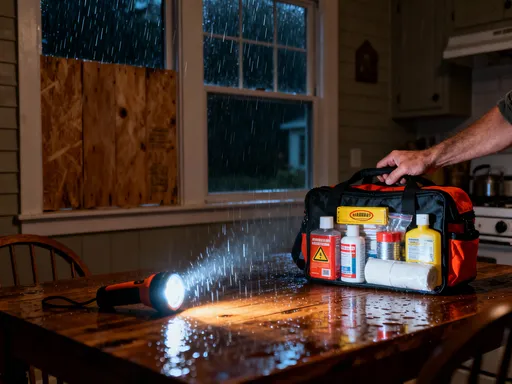
Storage is another often-overlooked factor. Supplies should be kept in a dry, accessible location, ideally in labeled, airtight containers. This prevents spoilage, loss, and the need to repurchase forgotten items. Seasonal checkups—such as testing batteries, rotating food stocks, and updating first aid kits—ensure everything remains functional. The most valuable tools are not the flashiest, but the ones used repeatedly: a multi-tool, a durable tarp, a quality flashlight with extra batteries. These items serve multiple purposes and can address a wide range of emergency needs without requiring constant replacement. By focusing on practicality over hype, families can build a preparedness kit that protects both health and finances.
Insurance: The Fine Print That Pays Off
Insurance is often seen as a safety net, but its real value lies in how well it’s understood and managed. Too many people discover too late that their policy doesn’t cover flood damage, or that their reimbursement is limited by depreciation clauses. The difference between a smooth recovery and a financial setback often comes down to documentation and awareness. A thorough review of your policy—at least once a year—can reveal gaps in coverage and opportunities to strengthen protection. This includes understanding deductibles, coverage limits, and exclusions. For example, standard homeowner’s insurance typically does not cover basement flooding, which requires a separate flood policy through the National Flood Insurance Program or a private insurer.
Equally important is maintaining a detailed home inventory. This is not just a list of belongings, but a documented record with photos, receipts, and estimated values. Storing this inventory in the cloud or on an external drive ensures it survives even if the home is damaged. In the event of a claim, this documentation speeds up processing and reduces the risk of undervaluation. Insurers may offer lower settlements if they suspect inflation of losses, but a well-organized inventory provides undeniable proof of what was lost. Families who take this step often recover thousands more than those who rely on memory alone.
Communication during the claims process is also critical. Promptly reporting damage, following up with adjusters, and keeping records of all interactions can prevent delays and denials. Some policyholders make the mistake of accepting the first settlement offer, not realizing they can negotiate for additional costs like temporary housing, debris removal, or code-upgrade requirements during rebuilding. Professional assistance, such as a public adjuster, can be worth the fee if the claim is complex. The goal is not to dispute legitimate decisions, but to ensure fair compensation based on actual losses. When handled correctly, insurance becomes not just a backup plan, but a powerful financial tool that minimizes out-of-pocket costs after a disaster.
Cutting Costs During Crisis Mode
When a disaster is unfolding, every decision carries financial weight. The instinct is to act quickly, but without strategy, spending can spiral out of control. Temporary housing is one of the biggest expenses—hotels near disaster zones often raise rates dramatically, and extended stays can cost thousands. One effective way to reduce this cost is to arrange lodging in advance with family or friends outside the affected area. Even a relative an hour away can provide a safe, low-cost alternative to expensive motels. If public shelters are used, understanding what they provide—meals, hygiene kits, medical aid—can prevent unnecessary purchases of items already available.
Contractor scams are another major risk. In the aftermath of storms or fires, unlicensed workers may offer quick repairs at seemingly low prices, only to deliver substandard work or disappear after an upfront payment. To avoid this, always verify licenses, check references, and get multiple written estimates. Reputable contractors may have longer wait times, but they protect the homeowner from costly rework. Government and nonprofit programs often provide lists of approved contractors, especially in federally declared disaster areas. Additionally, delaying non-urgent repairs until the initial rush subsides can lead to better pricing and availability, as the market stabilizes and more professionals enter the area.
Prioritizing spending is essential. Immediate needs include clean water, medical supplies, and safe shelter. Secondary expenses, like replacing electronics or cosmetic repairs, should be deferred. Community aid programs, food banks, and disaster relief organizations can cover many basic needs, reducing the burden on personal finances. Applying for assistance early increases the chances of receiving support, as funds are often distributed on a first-come basis. At the same time, families should continue monitoring their regular bills—utilities, insurance, loans—and communicate with providers about possible deferments or payment plans. The goal is not to stop all spending, but to direct it where it matters most, preserving cash for long-term recovery.
Rebuilding Smarter, Not Pricier
Recovery is not just about returning to normal—it’s an opportunity to build back better. Many families fall into the trap of replicating what was lost, only to face the same risks again. A smarter approach focuses on durability and risk reduction. For example, replacing a standard roof with impact-resistant shingles may cost 10–15% more upfront, but it can prevent future damage from hail or high winds, reduce insurance premiums, and extend the roof’s lifespan. Similarly, elevating electrical outlets and HVAC systems in flood-prone areas can prevent costly water damage during future events.
Leveraging financial assistance wisely is another key strategy. Government programs like FEMA grants or Small Business Administration loans can help cover rebuilding costs, but they are not meant to fund every expense. Understanding eligibility requirements and application deadlines ensures families don’t miss out on available support. At the same time, avoiding dependency on aid means planning for personal contributions—using emergency savings, adjusting budgets, or exploring low-interest financing options. The goal is to use external help as a supplement, not a substitute, for personal financial responsibility.
Timing purchases can also lead to significant savings. In the months following a disaster, demand for building materials and labor spikes, driving prices up. Waiting even six to eight weeks can result in lower costs as supply chains recover and contractors have more capacity. For non-urgent projects, shopping off-season—such as buying storm windows in spring instead of hurricane season—can yield discounts of 20% or more. DIY efforts, when safe and appropriate, can further reduce labor costs. Installing insulation, painting, or assembling modular furniture are tasks many homeowners can handle with basic skills and online tutorials. However, structural work, electrical, and plumbing should always be left to licensed professionals to ensure safety and compliance. By balancing cost, quality, and timing, families can rebuild stronger without overextending their finances.
The Calm After the Storm: Lessons That Last
Once the immediate danger has passed and repairs are complete, the financial journey is far from over. This is the time to reflect, learn, and strengthen future preparedness. Many families return to old habits, assuming another disaster won’t happen soon. But history shows that risk is ongoing, and complacency is costly. The most effective way to prevent future financial strain is to turn crisis lessons into lasting routines. This includes scheduling annual reviews of emergency supplies, updating insurance policies, and revising household budgets to reflect new risks or life changes. Treating preparedness as a continuous process, not a one-time event, builds long-term resilience.
Family finance drills can also reinforce these habits. Just as fire drills prepare households for evacuation, financial drills can simulate disaster scenarios—such as losing power for a week or facing a job loss—and test how well the family can respond. These exercises reveal gaps in planning and improve decision-making under pressure. They also foster open conversations about money, risk, and priorities, helping everyone understand their role in financial safety. Children, for instance, can learn to locate emergency supplies or understand the importance of conserving resources, creating a culture of preparedness across generations.
Ultimately, cost optimization in disaster planning is not about living with less—it’s about living with purpose. Every smart choice, from buying a reusable water filter to documenting household belongings, contributes to a stronger financial foundation. These actions may seem small in isolation, but together they form a powerful defense against uncertainty. Disasters cannot be prevented, but their financial impact can be managed. By preparing early, spending wisely, and learning continuously, families can protect what matters most: their safety, their stability, and their peace of mind. Resilience is not built in a day, but through consistent, thoughtful choices that add up over time. And in the end, that’s the real victory—not just surviving the storm, but emerging stronger because of it.