How I Finally Tamed My Stress With Movement—No Gym Required
Stress isn’t just in your head—it lives in your body, showing up as tight shoulders, restless nights, and that constant hum of anxiety. I used to feel overwhelmed daily, until I discovered the surprising power of simple movement. This isn’t about intense workouts or strict routines. It’s about smart, accessible exercise techniques that reset your nervous system. I tried them, tested them, and saw real shifts. Let me share what actually works.
The Hidden Cost of Chronic Stress
Stress is more than a feeling—it’s a full-body response that shapes how you think, feel, and function. When demands pile up, whether from work, family, or daily life, your body doesn’t just register the pressure mentally. It reacts physically. Your muscles tighten, your breathing becomes shallow, and your heart rate increases. These changes are part of a natural survival mechanism designed to protect you in moments of danger. But when stress becomes constant, this same system starts working against you.
The key player in this process is the sympathetic nervous system, often called the “fight-or-flight” response. When activated, it releases stress hormones like cortisol and adrenaline. In short bursts, these chemicals help you respond quickly to challenges. But when they remain elevated over time, they contribute to fatigue, weakened immunity, digestive discomfort, and difficulty concentrating. Many women in their 30s to 55s notice these effects during busy seasons of life—juggling careers, parenting, and household responsibilities—only to realize later that their bodies have been carrying the burden all along.
Chronic stress often shows up in subtle ways. You might find yourself snapping at loved ones over small things, struggling to fall asleep despite exhaustion, or waking up with a clenched jaw. Headaches, digestive issues, and unexplained aches can also be signs that stress has settled into your tissues. These aren’t just inconveniences—they’re signals from your body asking for relief. Ignoring them can lead to long-term imbalances, making it harder to enjoy daily life or stay present with the people who matter most.
What many don’t realize is that emotions aren’t processed solely in the mind. They’re stored and expressed through the body. Trauma, worry, and unresolved tension can linger in the muscles, especially in the neck, shoulders, and hips. This is why talking through stress helps, but doesn’t always bring full relief. The body needs its own form of release. Movement offers a direct pathway to discharge this accumulated tension, restoring balance without medication or drastic lifestyle changes. It’s not about eliminating stress completely—that’s impossible—but about building resilience so you’re no longer ruled by it.
Why Exercise Works When Nothing Else Does
When stress feels overwhelming, many turn to familiar coping strategies: scrolling through social media, reaching for comfort food, or watching TV to unwind. While these provide temporary distraction, they don’t address the root cause. In fact, passive behaviors can deepen the cycle of stress by keeping the nervous system in a state of low-grade alertness. What’s missing is physical discharge—the kind that only movement can provide. Exercise, even in gentle forms, acts as a natural reset button for the brain and body.
Physical activity helps regulate the very hormones that go into overdrive during stress. As you move, your body reduces cortisol levels and increases the production of endorphins and other mood-stabilizing chemicals. These biochemical shifts happen naturally and don’t require intense effort. A simple walk around the block can initiate this calming cascade. Unlike medications or supplements, movement gives your body the tools to self-regulate, strengthening its ability to return to balance after disruption.
The mind-body connection plays a crucial role here. When you engage in rhythmic, intentional movement, your brain receives signals that you are safe and in control. This isn’t just psychological—it’s physiological. The brain interprets sustained muscle activity as evidence that you’re no longer in danger, which allows the nervous system to shift from survival mode into a state of rest and recovery. Over time, this builds a new internal narrative: instead of feeling helpless in the face of stress, you begin to trust your ability to cope.
Organizations like the Centers for Disease Control and Prevention (CDC) and the World Health Organization (WHO) recognize physical activity as a cornerstone of mental well-being. Their guidelines recommend at least 150 minutes of moderate-intensity aerobic activity per week for adults, not only for heart health but also for managing anxiety and depression. The beauty of movement-based stress relief is that it doesn’t have to meet formal exercise standards to be effective. Even short bursts of activity—three 10-minute sessions a day—can make a meaningful difference. The key is consistency and awareness, not performance.
Breath-Linked Movement: The Foundation of Calm
One of the most powerful yet overlooked tools for stress relief is the combination of breath and gentle motion. This approach doesn’t require special skills or equipment. It’s based on a simple principle: when movement is synchronized with slow, deep breathing, it activates the parasympathetic nervous system—the body’s “rest-and-digest” mode. This counters the overactive stress response and brings an immediate sense of calm.
Walking with intentional breath is one of the easiest ways to begin. Try this: take a slow walk, either outdoors or indoors, and inhale for four steps, then exhale for six. The extended exhale is key—it triggers a relaxation response by stimulating the vagus nerve, which helps regulate heart rate and digestion. As you continue, notice how your shoulders soften and your thoughts begin to settle. This isn’t meditation in the traditional sense, but it has similar benefits. It grounds you in the present moment, breaking the cycle of rumination.
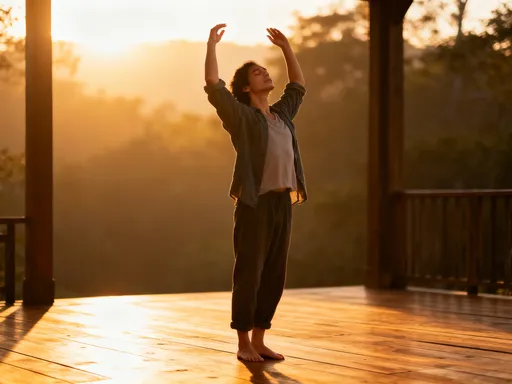
Mindful stretching offers another accessible entry point. Start with simple movements like reaching your arms overhead while inhaling, then folding forward gently as you exhale. Allow each motion to follow the rhythm of your breath, moving slowly and without strain. Focus on areas where tension commonly builds—your neck, upper back, and hips. The goal isn’t flexibility, but awareness. As you stretch, you may notice sensations you’ve been ignoring: tightness, warmth, or even slight trembling. These are signs that your body is releasing stored tension.
A 5-minute morning routine can set a calm tone for the entire day. Begin by standing tall and taking three deep breaths. Then, slowly roll your shoulders forward and back, circle your wrists and ankles, and gently tilt your head from side to side. Finish with a few forward bends and side stretches, always coordinating movement with breath. This practice doesn’t take much time, but it sends a powerful message to your nervous system: today will not be a day of constant urgency. Over time, this small ritual becomes a form of self-respect—a daily promise to care for your well-being before meeting the world’s demands.
Shake It Off: Low-Impact Techniques That Release Tension
Have you ever noticed how animals shake after a stressful event? A dog trembles after a loud noise. A horse shivers following a scare. This isn’t fear—it’s a natural mechanism for discharging excess energy from the nervous system. Humans have the same capacity, but we often suppress it. We’re taught to “stay composed,” to sit still, to push through. But this suppression allows stress to accumulate in the body, leading to chronic tension and emotional fatigue. Reintroducing shaking as a deliberate practice can help release what’s been held inside.
Shaking, also known as neurogenic tremoring, is a gentle, low-impact way to reset your nervous system. It doesn’t require strength or coordination—just willingness. Stand with your feet shoulder-width apart, bend your knees slightly, and let your arms hang loose. Then, begin to shake your hands, allowing the motion to travel up your arms and through your torso. Let your legs join in, keeping the movement relaxed and rhythmic. You don’t need to force it. Even a small, subtle tremor can be effective. Some people laugh at first; others feel a wave of warmth or tingling. These are signs that your body is letting go.
A simple 7-minute evening practice can help unwind the day’s tension. Start with 2 minutes of gentle shaking, focusing on areas where you hold stress—your shoulders, jaw, or hips. Follow this with 3 minutes of rhythmic swaying—side to side, front to back—like a tree in the wind. Finish with 2 minutes of light bouncing on the balls of your feet, keeping your knees soft. This sequence doesn’t raise your heart rate, but it creates internal movement that helps discharge stagnant energy. Many women report feeling lighter, calmer, and more grounded afterward—sometimes even tearful, as buried emotions surface and pass.
The beauty of these techniques is their accessibility. You can do them in your living room, before bed, or even during a work break. No outfit changes, no equipment, no judgment. Unlike high-intensity workouts that can feel overwhelming on stressful days, shaking and swaying meet you where you are. They don’t demand performance—they invite release. And because they work with your body’s innate wisdom, they foster a deeper sense of trust in your own resilience.
Strength Without Strain: Gentle Resistance for Mental Resilience
While gentle movement calms the nervous system, light resistance training builds a different kind of strength—one that supports mental resilience. This isn’t about lifting heavy weights or achieving a certain look. It’s about using controlled effort to reconnect with your body, improve posture, and cultivate a sense of inner stability. When you engage your muscles in a focused way, you reinforce the message that you are capable, grounded, and present.
Bodyweight exercises and resistance bands are ideal for this purpose. They provide enough challenge to build strength without straining joints or requiring a gym membership. Simple movements like wall push-ups, seated rows with a band, or standing leg lifts engage major muscle groups while promoting coordination and body awareness. The key is to move slowly and with intention, paying attention to how each muscle contracts and releases. This mindfulness turns exercise into a form of moving meditation.
A basic 10-minute routine can include: 10 wall push-ups (to strengthen chest and arms), 12 standing rows with a resistance band (for upper back and posture), 15 glute bridges (to support lower back and hips), and 10 slow squats (to build leg strength and balance). Perform each exercise with a steady breath—exhaling during effort, inhaling during recovery. Rest for 30 seconds between sets if needed. The goal isn’t to exhaust yourself, but to feel more centered and capable.
Over time, this type of practice improves not just physical strength, but emotional endurance. Women who incorporate gentle resistance into their routine often report feeling more confident in daily tasks, less reactive to stress, and more in tune with their bodies. There’s a quiet empowerment that comes from knowing you can rely on yourself—not just mentally, but physically. And because the routine is short and adaptable, it’s easier to maintain consistently, even on busy or low-energy days.
Making It Stick: Building a Realistic Routine
One of the biggest challenges isn’t knowing what to do—it’s actually doing it. Many women want to move more but face real barriers: lack of time, fluctuating energy, or limited space. The solution isn’t to aim for perfection, but to design a routine that fits your life. Sustainability comes from simplicity, not intensity. The most effective habits are those that feel doable, not draining.
Habit-stacking is a practical strategy for integrating movement into your day. This means linking a new behavior to an existing one. For example, take a 5-minute walk after lunch, do a few stretches while waiting for the kettle to boil, or practice deep breathing while folding laundry. These micro-moments add up. Over time, they rewire your brain to associate daily routines with self-care, making movement feel less like a chore and more like a natural part of your rhythm.
Tracking progress doesn’t have to involve numbers or apps. Instead, notice subtle shifts: you sleep more soundly, your shoulders feel looser, or you catch yourself pausing to breathe during a hectic moment. These are real wins. They reflect changes in your nervous system, even if they’re not visible on a scale or fitness tracker. Celebrate them quietly. They’re evidence that your body is responding.
Self-compassion is essential. Some days, you’ll miss your routine. That’s normal. Life is unpredictable. The goal isn’t flawless consistency, but gentle persistence. One missed day doesn’t erase progress. What matters is returning without guilt, without self-criticism. Treat yourself with the same kindness you’d offer a friend. This mindset shift—from striving to nurturing—transforms how you relate to your body and your well-being.
Beyond the Body: How Movement Changes Your Mindset
The benefits of movement extend far beyond physical relief. Over time, a regular practice reshapes your relationship with stress. Instead of feeling like a victim of circumstances, you begin to see yourself as someone who can influence their inner state. Each time you choose to move—whether it’s a walk, a stretch, or a few minutes of shaking—you reinforce a sense of agency. This isn’t about controlling everything, but about knowing you have tools.
Small, consistent actions build confidence. When you show up for yourself in this way, you send a message: I matter. This self-respect ripples into other areas of life. You may find yourself speaking up more, setting boundaries, or approaching challenges with greater calm. Emotional regulation improves not because you’re trying harder, but because your nervous system is more balanced. You’re no longer operating from a place of constant alertness.
This approach isn’t a quick fix or a trendy solution. It’s a sustainable, science-backed method for building resilience. It doesn’t require expensive equipment, special knowledge, or hours of time. It asks only for a few minutes a day and a willingness to listen to your body. And while it can’t eliminate life’s stressors, it equips you to meet them with greater strength and clarity.
As with any health practice, it’s important to consult a healthcare professional if you’re managing chronic anxiety, depression, or a medical condition. Movement is a powerful complement to professional care, not a replacement. Used wisely, it becomes part of a holistic approach to well-being—one that honors both your physical and emotional needs.