It’s not just telehealth: How online care helped me breathe easier—literally and emotionally
Life moves fast, and when health feels like just another task on the list, it’s easy to let it slide. I used to ignore my headaches, push through fatigue, and call it “being busy.” But then I discovered how online health services could quietly fit into my real days—no waiting rooms, no guilt, just care that felt doable. It wasn’t magic. It was simple, human-centered tech that finally made looking after myself feel possible. And honestly? It changed everything. I didn’t realize how much I’d been holding my breath—physically, emotionally—until I found a way to pause, connect, and heal without adding more to my plate.
The Moment I Realized I Wasn’t Actually Taking Care of Myself
I remember the exact moment I knew something had to change. It was a Wednesday morning, rain tapping against the kitchen window, and I was supposed to have a doctor’s appointment at 10 a.m. But a last-minute email from my team popped up—urgent, of course—and I canceled. Not rescheduled. Canceled. I told myself I’d book it again next week. But next week turned into the week after, and by then, the dull ache behind my eyes had become a constant throb. I was drinking more coffee, sleeping less, and snapping at my kids over spilled cereal. I wasn’t just tired—I was running on fumes, and I knew it. The guilt crept in slowly, like a shadow I couldn’t shake. I’d always prided myself on being the one who held it together, the mom who remembered the dentist appointments, the one who packed the lunches and remembered the permission slips. But here I was, ignoring my own body like it was an annoying notification I could swipe away.
What finally broke through wasn’t a crisis, but a quiet realization: I wasn’t taking care of myself at all. I was treating my health like a side project, something to squeeze in if there was time. And I wasn’t alone. So many of us—especially women in our 30s, 40s, and beyond—do this. We pour into everyone else until there’s nothing left. We tell ourselves we’re being strong by pushing through. But strength isn’t ignoring pain. Strength is recognizing when you need help and finding a way to get it. That’s when I first heard about online care. A friend mentioned she’d seen a doctor through her phone during her lunch break. I remember thinking, That can’t be real. But she looked rested. Calm. Like she’d actually been seen. And I wanted that—not just the convenience, but the peace.
First Steps: Clicking ‘Start Visit’ Felt Like Cheating (But It Wasn’t)
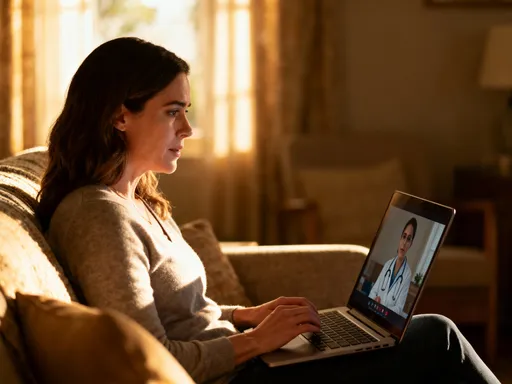
My first online visit felt like stepping into something forbidden. I was sitting at the kitchen table, my laptop open, the house finally quiet after the kids left for school. I clicked “Start Visit” and immediately wondered if I was doing it wrong. Was this even legitimate? Would they take me seriously? I half-expected a robot voice or a 20-minute wait, but instead, a real doctor appeared on my screen within minutes. She smiled, introduced herself, and asked how I was doing—not just “What’s wrong?” but “How have you been feeling lately?” That small shift changed everything. I didn’t feel like a patient. I felt like a person.
I told her about the headaches, the sleepless nights, the way my shoulders were always tight. She didn’t rush me. She asked about my work, my family, my stress levels. And then, gently, she said, “This sounds like tension headaches from burnout.” Not a mystery. Not something scary. Just my body asking for a break. Her advice was simple: rest, hydrate, take short walks, and come back if it didn’t improve. She even suggested a breathing exercise I could do in the car before picking up the kids. No prescriptions, no referrals—just care that made sense. And the best part? It cost less than my co-pay for an in-person visit. I closed my laptop and exhaled. For the first time in months, I felt seen. Not fixed, not judged—just seen. And that was enough to make me want to try again.
How One Small Change Unlocked a Whole New Routine
That first visit cracked something open. I started to think: if this worked for headaches, what else could it help with? The next time I had a skin flare-up—red, itchy patches on my arms that I’d been ignoring for weeks—I didn’t wait. I logged in during my afternoon tea. Same process: quiet corner, good lighting, honest answers. The doctor diagnosed it as mild eczema, sent a prescription to my local pharmacy, and gave me tips for managing it with moisturizers and stress reduction. No driving. No waiting. No feeling silly for “bothering” a doctor with a “small” issue. And because it was so easy, I actually followed through.
Then I tried it for allergies. Then for a nagging backache. Each time, the pattern was the same: low effort, high care. I began to realize that consistency wasn’t about willpower—it was about access. The easier it was to get help, the more likely I was to ask for it. So I started scheduling monthly check-ins, not because I was sick, but because I wanted to stay well. I called them my “mental wellness chats.” Just 20 minutes to talk about how I was sleeping, what was stressing me, whether I was moving my body enough. It wasn’t therapy, but it was support. And over time, these small acts added up. I wasn’t just reacting to problems—I was preventing them. I was building a rhythm of care that fit my life, not fought against it.
It’s Not Just for Me—My Whole Family Started to Lean In
One of the most surprising things? My family noticed. My teenage daughter, who used to roll her eyes at anything health-related, asked me how the online doctor thing worked. She was struggling with acne and hated the idea of going to a clinic. So I showed her how to sign up. She did her first visit from her bedroom, wearing pajamas, and actually followed the treatment plan—something she’d never done with in-person prescriptions. She told me later, “It didn’t feel like a big deal. Just like talking to someone who gets it.”
My husband, usually the “I’m fine” type, used it for his seasonal allergies. No more suffering through sneezing fits at work or forgetting to refill his nasal spray. He got help in 15 minutes during a break. Even my mom, who still uses a flip phone and calls Wi-Fi “the wireless,” gave it a try. She was nervous at first—“What if the doctor can’t see me properly?”—but after her first video visit for a routine blood pressure check, she said, “I felt like I had my own doctor in the living room.” That’s when it hit me: this wasn’t just about convenience. It was about dignity. About meeting people where they are, in their homes, in their clothes, in their real lives. For my daughter, it was privacy. For my husband, it was time. For my mom, it was comfort. And for all of us, it was connection.
When Real Life Got Hard—And Online Care Held Space
Then came the time I really needed it. I had minor surgery—a small procedure, nothing life-threatening, but enough to leave me sore and drained. The first few days were rough. I was on the couch, trying to keep up with emails, feeding the kids frozen meals, and feeling like I’d failed at recovery. I wasn’t in crisis, but I wasn’t okay. I had questions: Was the swelling normal? Could I take that painkiller with my other meds? But the idea of driving to a clinic felt impossible. So I opened the app and clicked “Talk to a Nurse.”
Within minutes, a kind voice came through my speaker. She walked me through my symptoms, reassured me about the swelling, and double-checked my medications. But then she asked, “How are you feeling emotionally?” I wasn’t expecting that. And suddenly, I was crying. Not because I was in pain, but because I hadn’t realized how lonely I felt. She listened. Didn’t rush. Didn’t minimize. Just said, “Recovery isn’t just physical. It’s okay to feel tired, to need help.” That conversation didn’t change my diagnosis, but it changed my experience. I didn’t feel like a burden. I felt supported. And that made all the difference. Online care didn’t replace my surgeon or my follow-up visits. But it held space for the in-between moments—the ones that don’t qualify as emergencies but still matter.
What I’ve Learned About Trust, Time, and Taking Up Space
Looking back, I realize how much I’ve unlearned. I used to think that real care meant sitting in a sterile office, filling out forms, waiting my turn. I thought convenience meant cutting corners. But I was wrong. Using online care isn’t lazy—it’s smart. It’s respecting my time, my energy, my peace. I’ve learned that showing up for myself doesn’t have to look dramatic. It can be quiet. It can be from my kitchen table, in my favorite sweater, with a cup of tea in hand.
I’ve also learned to trust my instincts. If I feel off, I don’t have to wait until it’s “bad enough” to seek help. I can check in. I can ask questions. I can be proactive. And that shift—from waiting to watching, from ignoring to noticing—has changed how I move through the world. I’m more present with my kids. I’m kinder to myself. I’m not trying to prove I can do it all. I’m learning to do what works. And honestly? That feels like freedom. I used to think strength meant pushing through. Now I know it means pausing, listening, and choosing care—every single time.
Why This Isn’t Just a Trend—It’s a Kinder Way to Live
I used to think good health looked like perfect meals, daily workouts, and zero stress. Now I know it looks like logging in when I’m tired. It looks like asking for help before I’m broken. It looks like my daughter treating her skin without shame, my husband managing his allergies without missing work, my mom staying on top of her blood pressure from her armchair. It looks like small, steady acts of showing up—for ourselves and for each other.
Online care isn’t a replacement for every kind of medical need. There are times when we need labs, scans, hands-on exams. But for so much of what we face—stress, fatigue, minor illnesses, mental wellness—it’s a gift. It’s care that meets us in real life, not in an idealized version of it. It’s not about technology replacing humanity. It’s about technology making humanity more accessible. More gentle. More possible.
If you’ve ever canceled an appointment because life got in the way, if you’ve ever ignored a symptom because you didn’t have time, if you’ve ever felt like your health was the last thing on your list—this is for you. You don’t have to wait until you’re “sick enough.” You don’t have to prove you deserve care. You already do. And help doesn’t have to be hard to be real. Sometimes, it’s just a click away. So go ahead. Take up space. Breathe. You’re worth the time.